

Grape polyphenols in animal nutrition: more resilience to oxidative stress
A multimodal antioxidant strategy to protect cell membranes, reinforce endogenous defenses and support productive consistency under high metabolic demand.

Modern animal production has achieved higher levels of efficiency through genetic improvement, nutritional optimization and intensive management. This progress also increases metabolic demand and reactive oxygen species generation in highly active tissues such as the liver, intestine, muscle and reproductive system.
Grape polyphenols: an antioxidant strategy with multimodal action
Although reactive oxygen species are part of normal cell physiology, when they exceed the body’s antioxidant capacity a redox imbalance or oxidative stress develops. This silent factor can compromise cell function, metabolic efficiency, immune response, final-product quality and production consistency.
Polyphenols from grape extract (Vitis vinifera) have attracted growing interest because of their antioxidant capacity and their role in modulating cellular pathways related to oxidative stress and inflammation.
Unlike more specific antioxidants such as vitamin E or selenium, grape polyphenols combine direct antioxidant activity with broader cellular regulatory mechanisms.
- Direct neutralization of reactive speciesThey can donate electrons or hydrogen atoms and stabilize free radicals, helping to reduce the propagation of oxidative reactions in cell membranes, circulating lipids and metabolically active tissues.
- Chelation of transition metalsBy limiting the availability of iron and copper, grape polyphenols can reduce pro-oxidant reactions such as the Fenton reaction and decrease ROS formation at an early stage.
- Modulation of redox signalingActivation of the Nrf2/ARE pathway favors the expression of antioxidant and detoxifying enzymes such as superoxide dismutase, catalase, glutathione peroxidase and heme oxygenase-1.
- Modulation of inflammation and radical productionGrape polyphenols can influence pathways such as NF-κB, iNOS and NADPH oxidase, helping reduce oxidative pressure at its source.
Under commercial conditions, oxidative stress rarely occurs in isolation. It is often associated with intestinal inflammation, heat stress, dysbiosis, tissue damage or high metabolic demand.

Cellular evidence: protection against oxidative challenge
Olivares-Ferretti et al. evaluated the antioxidant effect of a grape-extract-based molecule, ENTAN, in two cell lines: LMH, derived from Gallus gallus hepatocytes, and CHSE-214, derived from salmonid embryos.
The objective was to determine its capacity to protect terrestrial and aquatic cells against oxidative stress induced by hydrogen peroxide.
Under exposure to 0.1 mM hydrogen peroxide, ENTAN allowed cell viability to recover to levels comparable with the control in both cell lines. The study also showed a reduction in TBARS formation, biomarkers of lipid peroxidation and indicators of cellular oxidative damage, from values close to 5 μM MDA/mg protein to approximately 2.5 μM MDA/mg protein at concentrations of 0.05 or 0.5 g/L.
If a nutritional strategy can reduce membrane oxidation and preserve cell viability under oxidative challenge, it may help maintain the functionality of key tissues in animals subjected to high metabolic demand.

Productive impact of improved redox homeostasis
The value of grape polyphenols lies not only in reducing oxidation markers but also in helping translate cellular protection into greater productive stability. By contributing to redox homeostasis, they help preserve the functionality of key tissues and organs involved in performance, reproduction and final-product quality.
Applications in poultry farming
Layers
Persistent egg production implies high metabolic demand, especially at hepatic and reproductive levels. The yolk contains lipids susceptible to oxidation, particularly when diets rich in unsaturated fatty acids are used. Polyphenols can help preserve oxidative stability during storage, reduce lipid peroxidation and contribute to greater consistency of internal egg quality.
Breeders
Redox balance is decisive for fertility, fertile-egg quality, embryonic viability and chick robustness. Antioxidant support through grape polyphenols can be of interest in older flocks, during heat stress or when fertility and hatchability are variable.
Broilers
Application can be targeted at phases of high metabolic pressure, heat stress, intestinal challenges or diets with increased oxidative risk. In these situations, redox modulation can help preserve feed efficiency, tissue integrity and flock uniformity.
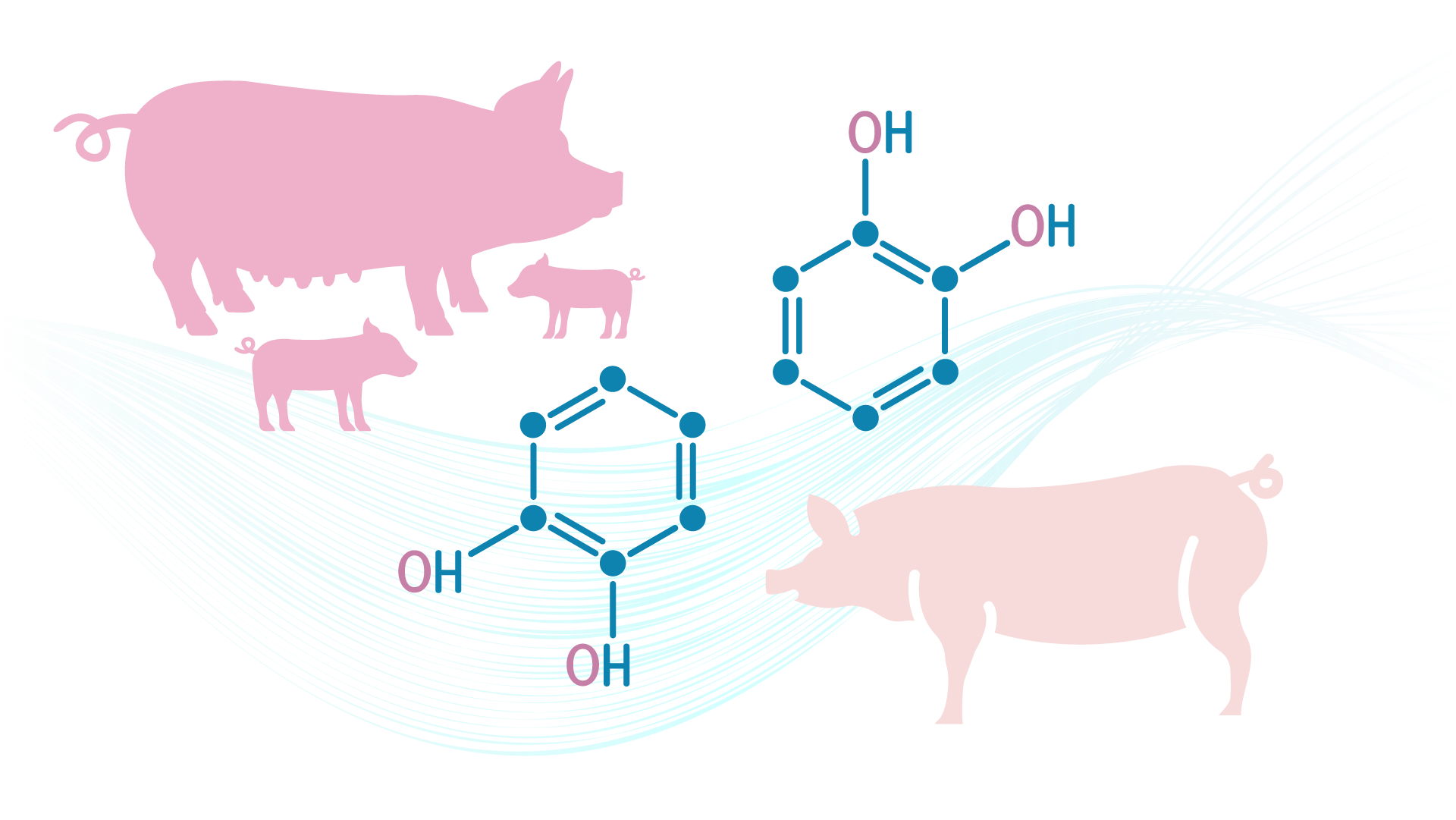
Applications in pigs
Breeding sows
Gestation, farrowing and lactation are phases of high metabolic demand. Oxidative stress has been linked to lower reproductive performance, greater variability in birth weight, poorer litter uniformity and lower piglet vitality. A polyphenol-based antioxidant strategy can help maintain redox balance during these critical phases, supporting placental functionality, metabolic response and lactation quality.
Growing-finishing pigs
Rapid growth, high-energy diets and management stressors can increase ROS generation. Lipid oxidation also directly influences meat stability and shelf life. Grape polyphenols can therefore contribute both to metabolic efficiency and to preservation of meat quality under commercial conditions.
Conclusion
Grape-extract polyphenols are a valuable nutritional tool for modern animal production because of their multimodal action on redox balance. This approach makes it possible to address oxidative stress as a factor linked to metabolism, reproduction, final-product quality and production efficiency, helping preserve cell function and improve resilience under challenging conditions.
References
Olivares-Ferretti, P. et al. (2024). Novel antioxidant additive ENTAN molecule for animal production: Evaluation at the cellular level. Electronic Journal of Biotechnology, 71, 57–62.
Kaya, A. et al. (2014). The effects of diets supplemented with crushed and extracted grape seed on performance, egg quality parameters, yolk peroxidation and serum traits in laying hens. European Poultry Science, 78.
Romero, C. et al. (2022). Productive performance, egg quality and yolk lipid oxidation in laying hens fed diets including grape pomace or grape extract. Animals, 12(9), 1076.
Hafeez, A. et al. (2023). Impact of grape seed extract on egg production traits, nutrient digestibility, lipid peroxidation and fertility of laying hens during early production. The Veterinary Quarterly, 43(1), 1–7.
A solution aligned with this challenge: ENTAN
Grape-extract-based antioxidant solution rich in polyphenols to reinforce cellular protection against oxidative stress.
View ENTAN
