
Stabilised butyrate technology to optimize intestinal health from the earliest stages of production
How to overcome the limitations of conventional protection technologies and release butyrate without depending on the animal’s enzymatic maturity.

Intestinal health is a key factor in productive efficiency. In monogastric species, the gastrointestinal tract is involved in nutrient digestion and absorption, acts as a barrier against pathogens and regulates metabolic and immune processes.
Butyrate in animal nutrition: limitations of conventional technologies
Short-chain fatty acids, especially butyric acid, are increasingly relevant because of their effects on intestinal mucosa, microbiota and digestive epithelium metabolism. Butyrate is a major energy source for enterocytes, promoting villus development, barrier integrity and nutrient absorption.
Pure butyric acid is highly volatile, corrosive and has an intense odor that makes handling in feed mills difficult. It is therefore commonly used as sodium or calcium butyrate salts.
Several technologies have been developed to improve stability and target release:
- Fat-encapsulated butyrates.
- Butyrates encapsulated in protein or carbohydrate matrices.
- Esterified butyrates, including mono- and tributyrins.
Many protection systems depend on digestive enzymes, particularly pancreatic lipases, to release active butyrate.
The nutritional challenge in young animals
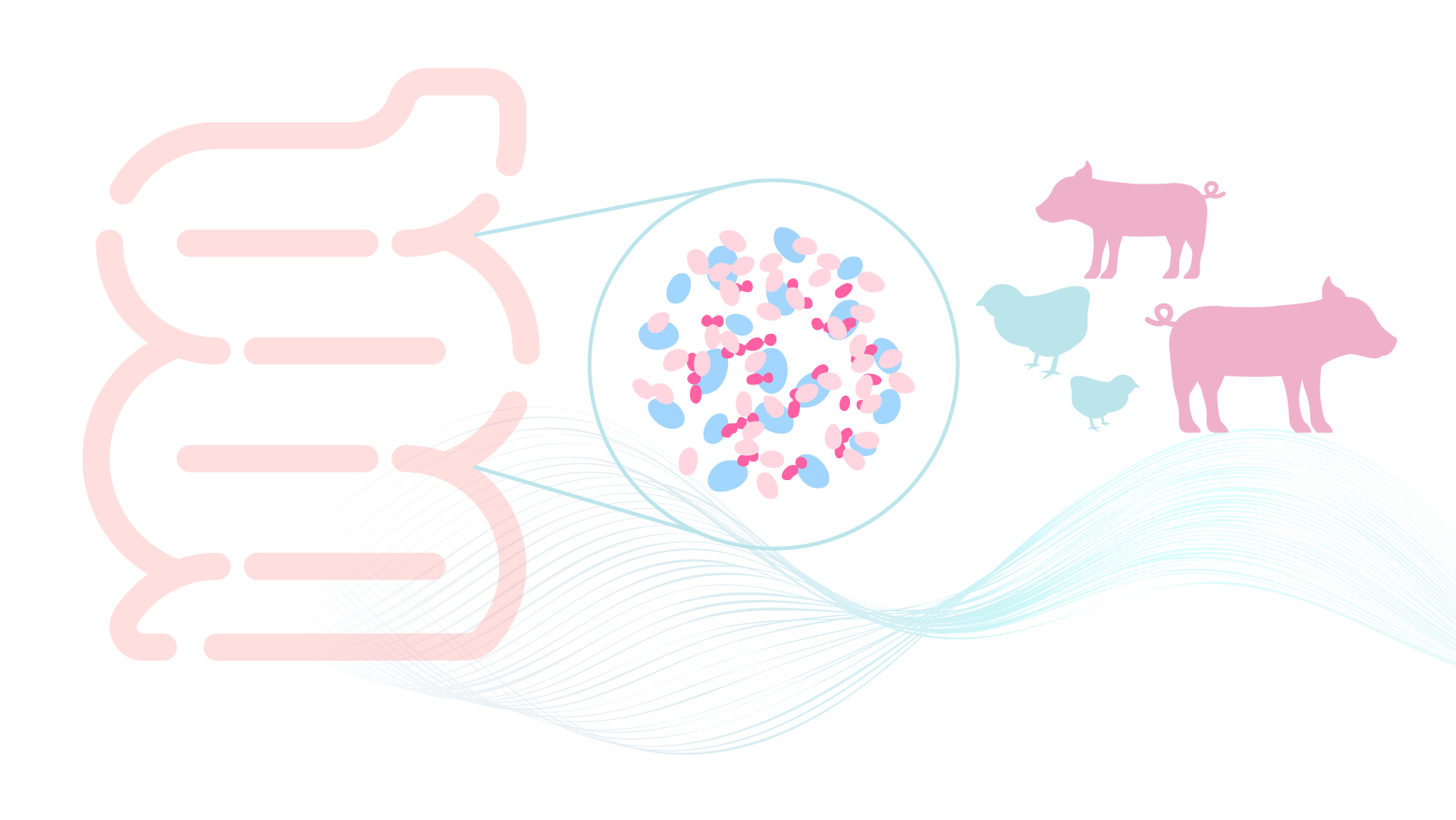
This enzymatic dependence is especially relevant in young animals, whose digestive systems have not reached full functional maturity. Pancreatic lipase activity is limited during the first weeks of a piglet’s life and increases progressively with age. After weaning, the exocrine pancreas also undergoes adaptation to the solid diet, with temporary reductions in enzymes such as lipase and trypsin.
A similar phenomenon occurs in poultry: newly hatched chicks have an immature digestive system, and digestive enzyme activity increases during the first days post-hatch.
Products that require lipases may release insufficient butyrate precisely when it is most needed: the early post-weaning period and the first weeks of life.
Exogenous butyric acid is particularly interesting in these stages to:
- Stimulate intestinal development.
- Improve mucosal integrity.
- Promote microbiota balance.
- Increase digestive efficiency.

BUTYRON: a new protection and stabilization technology
IGUSOL Advance developed BUTYRON to overcome the limitations of conventional systems. It is an innovative source of sodium butyrate stabilized with calcium carbonate salts through a multilayer manufacturing technology.
BUTYRON contains 60% stabilized sodium butyrate and is supplied as microbeads obtained through a progressive mineral coating process. Unlike lipid encapsulation or esterification systems, it does not use fat matrices or glycerol bonds.
Progressive release without enzymatic dependence
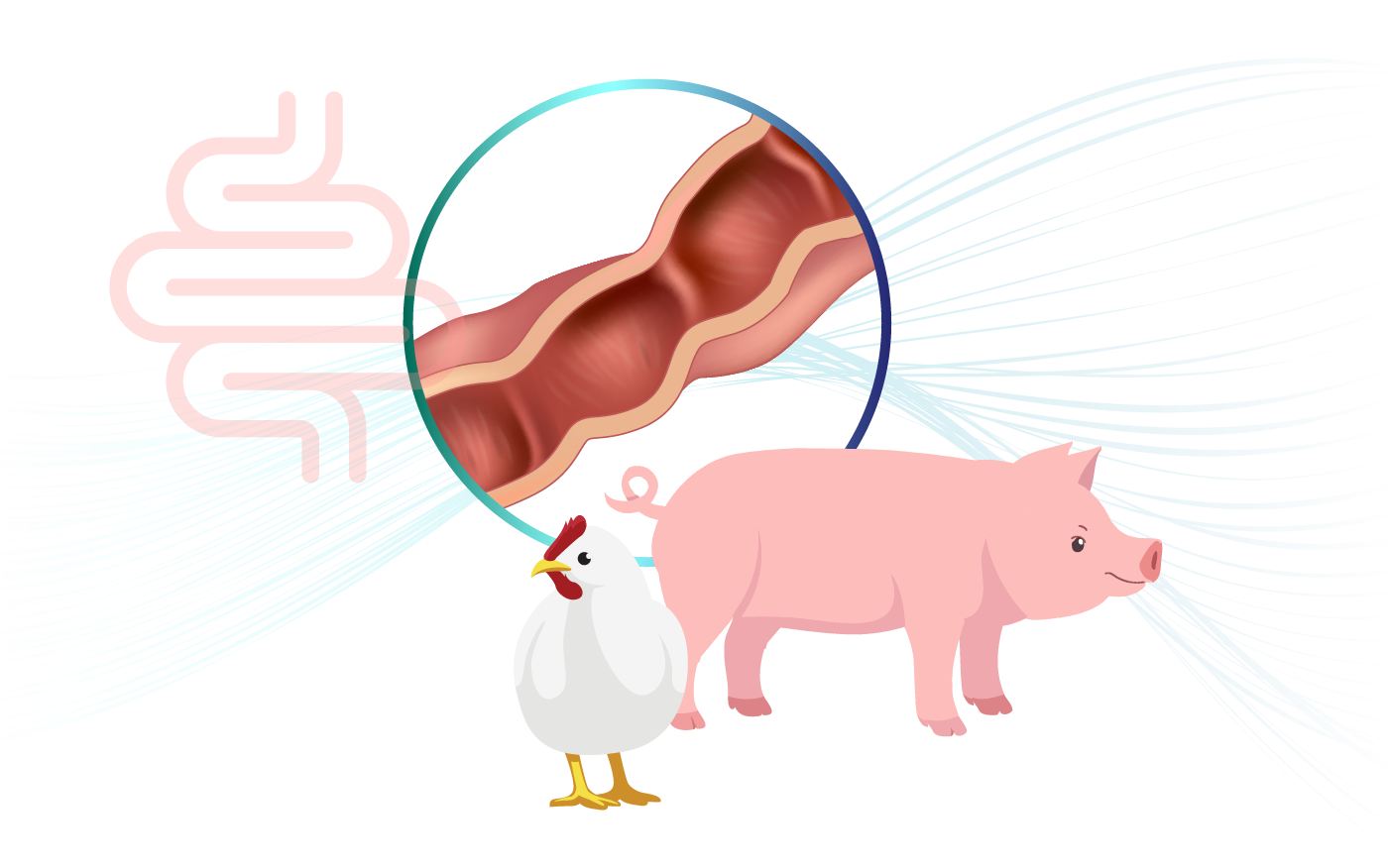
- Greater efficacy in young animalsBUTYRON starts releasing upon contact with digestive fluids and gastrointestinal pH, bypassing the limitation associated with low pancreatic lipase activity.
- Release in proximal and distal segmentsIts mixed release pattern allows activity in the stomach or proventriculus, proximal intestine and distal intestine, supporting microbiota, intestinal integrity and digestibility.
- Improved stability and handlingThe stabilized microbead technology significantly reduces odor, improves feed-mill handling and promotes homogeneous distribution in feed.
Proven productive benefits
Butyric acid supports intestinal mucosa development, barrier integrity through tight-junction proteins and mucins, microbiota modulation and a lower pro-inflammatory pressure.
Trials with BUTYRON have shown improvements in final weight, feed conversion ratio, feed intake and productive efficiency. Broiler trials reported a better European Production Efficiency Factor compared with other butyrate sources, while weaned piglets showed higher weight gain and improved feed conversion.
A solution adapted to modern production
- High sodium butyrate concentration.
- Progressive release throughout the gastrointestinal tract.
- No enzymatic dependence.
- Excellent feed-mill handling.
Conclusion
Butyric acid is widely used to improve intestinal health and productive performance in monogastrics, but efficacy strongly depends on protection technology. BUTYRON’s calcium-carbonate stabilization enables progressive release without relying on digestive enzymes, making it particularly relevant for young animals.
A solution aligned with this challenge: BUTYRON
Concentrated stabilized butyrate with gradual release throughout the gastrointestinal tract.
View solution BUTYRON
